The Mirror and the Mask: Why it Took Thirty Years to See My ADHD
For most of my life, I didn’t have a reflection; I had a script.
When you are raised by narcissistic parents, your primary function isn’t to grow; it is to perform. In the neurotypical-centric world, ADHD is often framed as a “disorder of self-regulation.” But for those of us raised in the shadow of narcissism, the “self” wasn’t something we were allowed to regulate. It was something we had to hide, suppress, and eventually forget, just to maintain the peace.
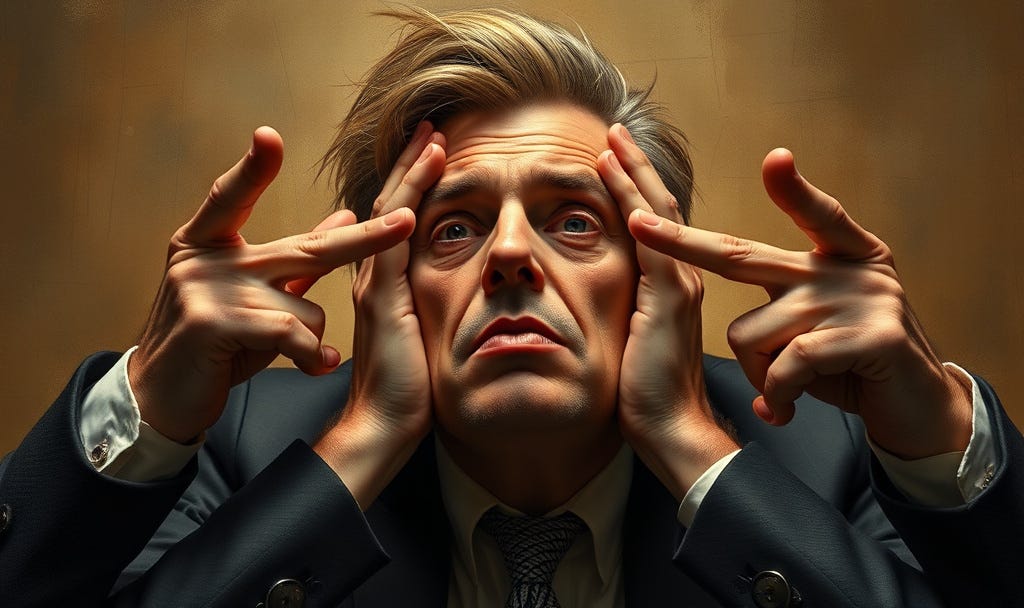
This Sunday, I want to explore the painful, clarifying intersection of late-diagnosis ADHD and the realisation that the people who raised us were fundamentally incapable of seeing us—not because of our deficits, but because of theirs.
The Invisible Disability in a House of Glass
Research into the overlap of Adverse Childhood Experiences (ACEs) and neurodivergence suggests a complex, often devastating synergy. When a child has ADHD, they require a high degree of external structure and, more importantly, emotional attunement. We need “external frontal lobes”—parents who can help us co-regulate until we develop the tools to do it ourselves.
However, a narcissistic parent does not see a child; they see an extension of themselves. In this environment, my ADHD symptoms—forgetfulness, emotional dysregulation, chronic “daydreaming,” and hyperfocus—were not viewed as neurological traits. They were viewed as personal affronts.
In my home, executive dysfunction was rebranded as a moral failing. My inability to “just do it” wasn’t a dopamine deficiency or a struggle with task initiation; in my parents’ eyes, it was a lack of respect for their authority. Because the narcissistic parent requires “perfection” to bolster their own fragile ego, my struggles were an embarrassment to them. Consequently, I spent thirty years masking—an exhausting, high-stakes performance of neurotypicality—because the cost of being “different” was the total withdrawal of whatever conditional love was on the table.
The Scapegoat and the Symptom
For many of us, the diagnosis is delayed because we become experts at “over-compensating.” We learn to use anxiety as a fuel for executive function. If you are terrified of the narcissistic rage that follows a forgotten chore or a lost jumper, your brain develops a hyper-vigilant “workaround.” You aren’t functioning well; you are functioning out of fear.
Clinical data suggests that the chronic stress response (the HPA axis) in children of narcissists can actually mimic or exacerbate ADHD symptoms. When you are in a constant state of “fight or flight,” your prefrontal cortex—the part of the brain responsible for focus and organisation—effectively goes offline. For decades, I couldn’t tell where my ADHD ended and my trauma began. I assumed I was just “broken” or “lazy,” a narrative my parents were all too happy to reinforce because it kept me compliant and eager to please.
The Cycle of Empty Wells: Understanding the Incapacity
It is a brutal epiphany to realise that your parents did not love you in the way you needed. It is perhaps even more complex to realise that they couldn’t.
Narcissism is often a compensatory mechanism for profound developmental trauma. Data on personality disorders suggests that narcissism is frequently a “defensive shell” built over a void. They couldn’t mirror my needs because they were eternally searching for a mirror for their own.
Understanding that they were incapable of love isn’t an excuse for their behaviour, but it is a vital piece of the diagnostic puzzle. It explains why my ADHD was missed. To be diagnosed, you have to be observed by someone objective. But in a narcissistic household, you are only ever utilised. If my struggles didn’t serve their narrative, those struggles effectively didn’t exist. Their own childhoods—likely filled with the same lack of empathy they showed me—created a structural deficit in their ability to care for another human being’s internal world. They were empty wells trying to offer water.
The Catalyst: The Safety of Being Seen
The journey to my 30s was a marathon of burnout. I was a high-achiever who felt like a fraud, constantly vibrating with the internal restlessness that defines adult ADHD. The mask was beginning to crack, and I had no idea why.
The turning point wasn’t a clinical screening; it was a relationship.
Falling in love with someone who actually noticed me—the real me, not the mask—changed the physics of my world. When someone loves you without conditions, they start to notice the patterns you’ve been trained to ignore. In a narcissistic dynamic, your “quirks” are targets for criticism. In a healthy, loving dynamic, they are data points for care.
My partner began to point out the things I had suppressed for decades:
“You seem to struggle with transitions between tasks; maybe we should build in more time?”
“You aren’t being lazy; you’re clearly experiencing sensory overload.”
“Why are you apologising for losing your keys? It’s just a brain glitch, it’s not a crime.”
In the safety of that gaze, the mask didn’t just slip—it fell off. I realised that my “personality flaws” were actually symptoms of a brain that works differently. For the first time, I wasn’t being measured against a narcissistic standard of perfection; I was being observed with curiosity and compassion. It was through their eyes that I finally saw the ADHD. I didn’t need to be “fixed”; I needed to be accommodated.
Healing the Timeline
Late diagnosis is, at its heart, a form of grief. You mourn the version of yourself that could have existed if you’d had support at seven instead of thirty-seven. You mourn the parents you deserved but didn’t get. You look back at three decades of struggle and realise how much of that pain was unnecessary.
But there is also a profound power in the “Now.” By naming my ADHD, I have reclaimed my autonomy. I am no longer a broken tool in someone else’s workshop; I am a complex, neurodivergent adult building a life that finally fits.
We weren’t “too much” or “not enough.” We were simply navigating a world without a map, while being told the fog was our fault. Now, the fog is lifting, and for the first time, I can see the path ahead.


A well written piece that I can relate to, Thank you.