Sunday Dispatch: The Ghost in the DNA
When you realise the "monster" under the bed was just untreated, undiagnosed, and drowning.
The Vow
I made a vow when I was twelve years old. I think many of us did.
I was sitting on the stairs, listening to the familiar, rising cadence of a parental meltdown downstairs. It was over something small - a lost set of keys, a spilled drink, a tone of voice that was interpreted as “disrespect.”
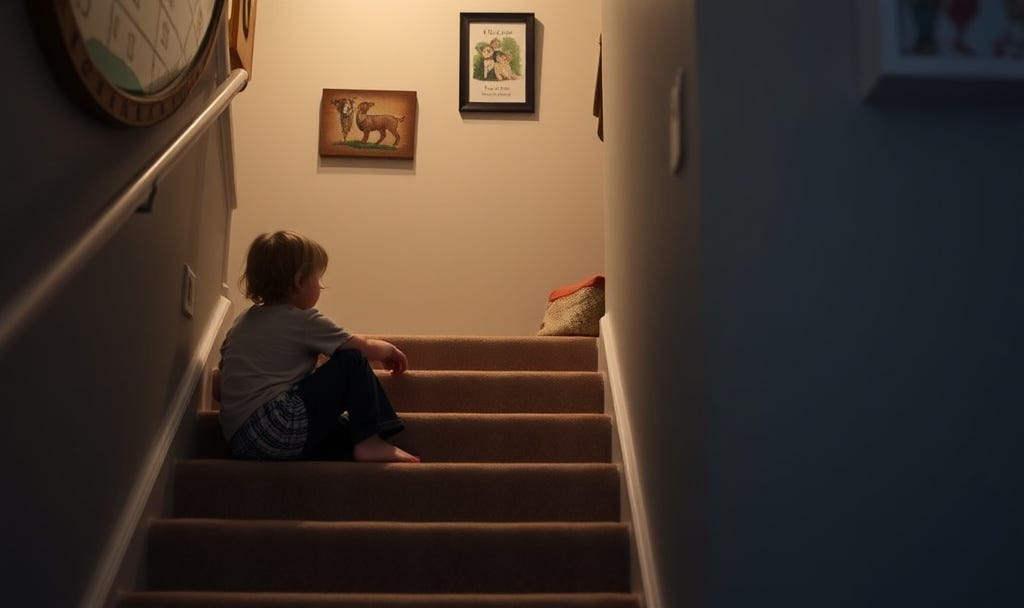
The air pressure in the house had dropped. The “walking on eggshells” protocol had been initiated.
And I remember hugging my knees and thinking: I will never be like this. When I grow up, I will be calm. I will be consistent. I will not let the chaos in.
For decades, I viewed my parents through the lens of character flaws. They were “narcissistic.” They were “volatile.” They were “selfish.” These labels were useful; they were shields. If they were villains, then my pain was a hero’s journey.
But yesterday, we looked at the data. We looked at the $h^2$ coefficient. We looked at the 80% heritability of this neurotype.
And that data did something inconvenient. It took my villain, and it turned them into a tragedy.
The Retrospective Diagnosis
When I look back at my childhood now, armed with the vocabulary of AuDHD, the scenes change.
The father who exploded in rage when the routine was disrupted? That wasn’t just control; that was Autistic rigidity meeting unexpected change.
The mother who stayed in bed for days, unable to cope with the demands of the household? That wasn’t just “laziness” or “depression”; that was ADHD burnout and executive paralysis.
The parent who couldn’t handle your emotions because they took up too much space? That was sensory overload.
They were raising us in a “Data Desert.” They were driving a Ferrari brain with bicycle brakes, and no one had ever told them how the engine worked.
They were masking. They were performing “normalcy” every day at work, at church, in the community. And by the time they got home to us - their safe space - they had nothing left. The mask fell, and the dopamine-starved, cortisol-soaked nervous system took over.
We were the collateral damage of their unmanaged biology.
The Grief of the “Double Hit”
This realisation doesn’t fix the damage. In fact, it brings a specific, heavy kind of grief.
It is easier to be angry at a monster than it is to mourn a drowning swimmer who pulled you under with them.
If they had known... could they have loved us better?
If they had access to the stimulants, the noise-cancelling headphones, the vocabulary of “overstimulation”... would I have fewer scars?
We can’t answer that. And we certainly can’t go back and fix them. As we will discuss on Wednesday, you cannot ask a dry well for water, even if you now understand why the well is dry.
Breaking the Echo
But here is the grace: We are the Cycle Breakers.
We are the first generation in this genetic lineage to possess the User Manual.
When I feel that familiar rise of “rage” because the house is messy, I don’t scream. I say, “I am overstimulated.”
When I feel the urge to shut down and dissociate, I don’t abandon my loved ones. I say, “I need a sensory break.”
We have the chance to honour our parents not by fixing them, but by not becoming them.
We heal the lineage by treating our own nervous systems with the kindness they never received. We stop the “compliance” and the “performance” that drove them mad, and we build a life that actually fits our brains.
The Monday Invitation
This week, we are going to focus on that “Performance.”
Tomorrow morning, I’m sending out the Cost of Compliance Toolkit. We are going to audit the energy you spend Masking. We are going to look at the “Energy Ledger” that our parents ignored until they went bankrupt.
We can’t change the past. But we can ensure that the “Ghost in the DNA” stops haunting us, and starts guiding us toward a gentler way of living.
See you in the inbox tomorrow morning.

